
As party primaries across U.S. states gradually approach their end, political forces backed by the cryptocurrency industry are turning their attention to the November general election. A leading cryptocurrency industry campaign fund recently supported a Democratic candidate in Massachusetts whose advantage in the primary was clear, also meaning that the fund’s main primary-stage campaign efforts are largely nearing completion.
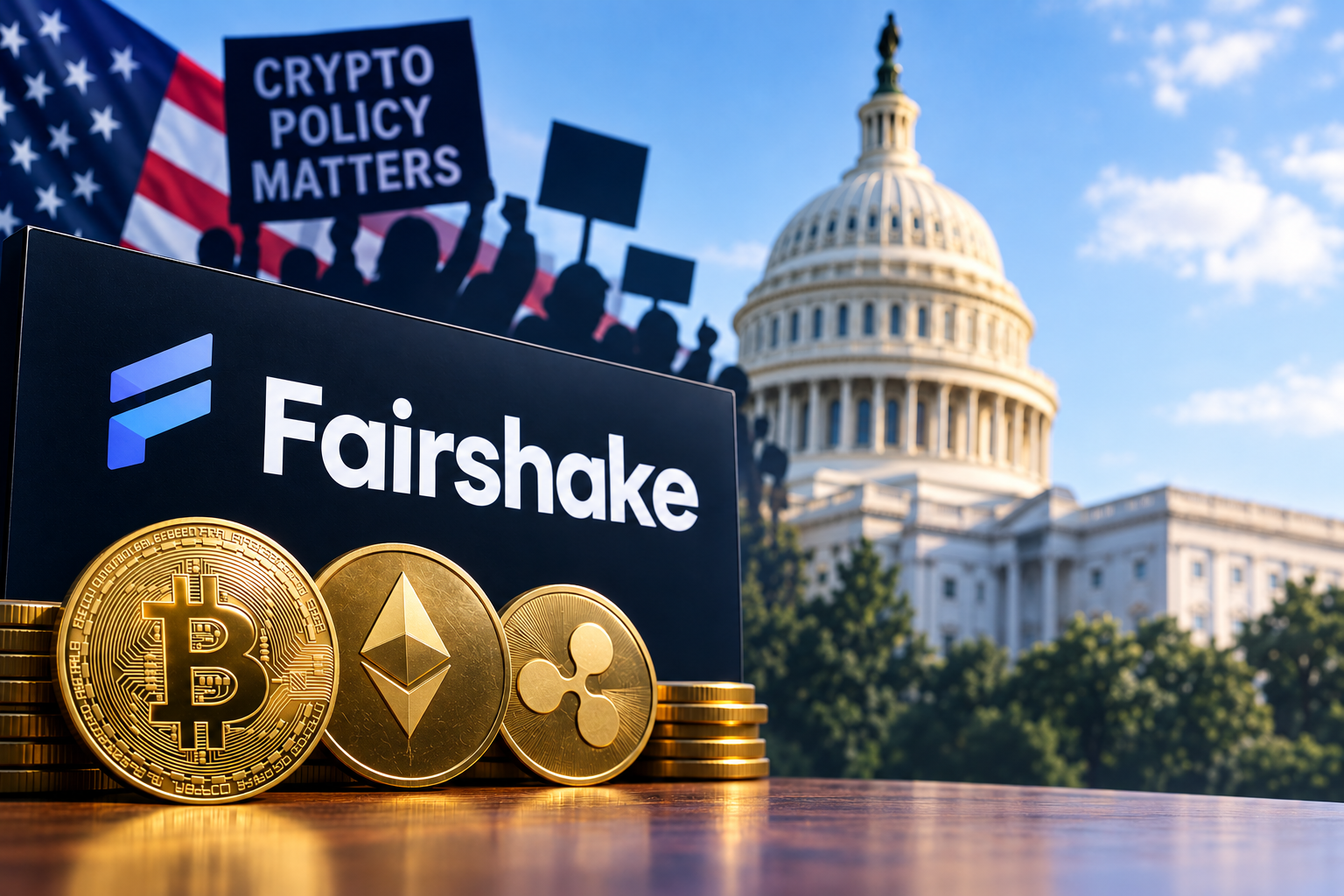
The Fairshake political action committee gave moderate support to U.S. Representative Jake Auchincloss. Vote counts released Tuesday evening showed that the Democratic incumbent held a clear advantage in the primary. With Auchincloss securing the advantage, the number of primary-winning candidates supported by Fairshake and its super PAC has increased to about 50.
Although Fairshake has long made efforts to support candidates from both parties, its performance in Republican primaries has attracted particular attention. This year, the organization helped Barry Moore in Alabama, Andy Barr in Kentucky, Kevin Hern in Oklahoma, and Harriet Hageman in Wyoming win their Senate primaries.
Harriet Hageman will replace retiring Senator Cynthia Lummis. All of the above candidates are expected to have a chance of winning the November general election and entering the Senate with positions supporting cryptocurrency policies.
Prediction markets are also currently giving these candidates relatively high probabilities in the general election. Polymarket data shows that about 97% of bettors expect Hern to win, about 96% of participants expect Hageman to win, and about 99% believe Moore will win the election; Kalshi data shows Barr’s probability of winning is close to 94%.
If these candidates ultimately win, they will enter the Senate next year. At that time, the Senate will continue to face major cryptocurrency legislative issues, especially after failing to advance the Digital Asset Market Transparency Act later this month. Any change in the composition of lawmakers could have an important impact as new supporters enter the Senate.
At the same time, Fairshake’s spending in some Democratic primaries also suffered a clear setback. Illinois Lieutenant Governor and Democrat Juliana Stratton could ultimately still enter the Senate, while Fairshake and related organizations had previously spent more than $10 million trying to prevent her from winning the primary. This became Fairshake’s largest funding loss to date.
Fairshake and its affiliates are primarily funded by Coinbase, Ripple and a16z. In addition to participating in the above races, the organization also helped 7 firmly pro-cryptocurrency incumbent lawmakers defend against primary challenges, while supporting a group of pro-cryptocurrency candidates from both parties, many of whom are expected to enter Congress for the first time next year.
A considerable portion of these new candidates are Democrats. This positioning is particularly notable as the House is expected to shift to a Democratic majority.
Regarding the upcoming election arrangements, Fairshake spokesperson Geoff Vetter said in a recent statement: “Having secured dozens of victories in national House and Senate elections, and already having $122 million ready for the fall campaign, we will not slow our pace as we enter November.”
However, this year’s U.S. party primaries have not completely ended. A small number of campaigns are still underway in New Hampshire, Rhode Island, Delaware and Louisiana, but the vast majority of nominations in both parties have been determined, with the final candidates set to compete in the November 3 general election.
In terms of overall spending, although other cryptocurrency-related super PACs also took action early in this election cycle, their major expenditures remain significantly below those of Fairshake.
Among them, Fellowship PAC is backed by Cantor Fitzgerald and Anchorage Digital. It previously said it planned to spend $100 million, but has actually raised only about $11 million so far, with most of the funding coming from Cantor.
Fellowship has been associated with Tether since its establishment. However, U.S. campaign activities cannot accept foreign funds. The organization is funded by a financial company responsible for managing Tether’s U.S. reserves and is managed by a Tether executive.
In terms of candidate positioning, the slate supported by Fellowship is mainly made up of Republicans, while also including 3 Democrats, including Virginia Senator Mark Warner.
Almost all of the super PAC’s spending was directed toward an emerging political company. The company was co-founded by Bo Hines, who previously served as President Donald Trump’s crypto adviser and currently oversees Tether’s business in the United States.
It remains unclear whether Fellowship will invest campaign funds again during the November general election.
Meanwhile, another super PAC, Digital Freedom Fund, received support from Tyler and Cameron Winklevoss. The brothers invested $21 million in the fund through Winklevoss Capital Fund, while Kraken parent company Payward provided an additional $1 million.
Tyler and Cameron Winklevoss previously said that the fund would be used to support conservative candidates who agree with Trump’s cryptocurrency policies. However, as of now, Digital Freedom Fund has not supported any candidate.